
 +91 90540 90590
 connect@roblinx.com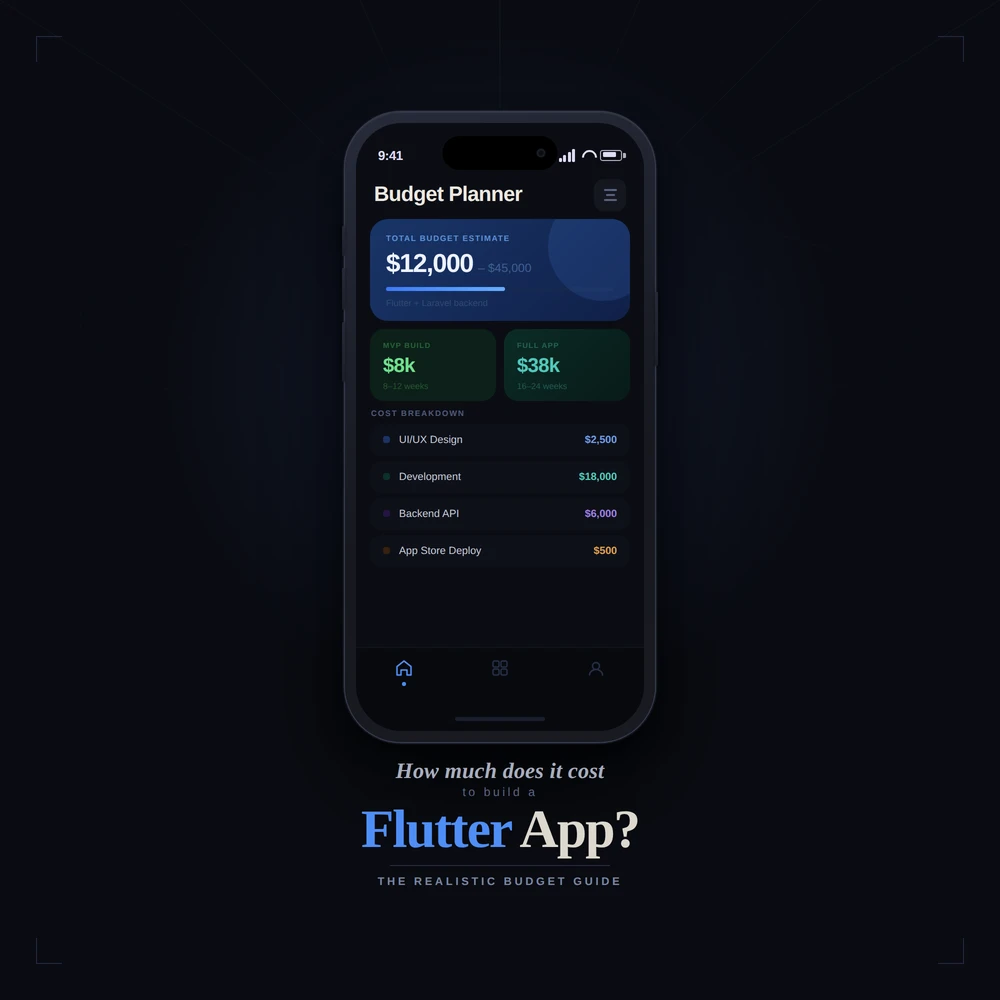
Have you ever had a brilliant idea for a mobile app, only to put it on hold because you assumed it would cost an absolute fortune?
If you search the internet for app development costs, you will see giant agencies throwing around terrifying numbers like $50,000 or $100,000. For an independent founder, a growing business, or a startup, those numbers don't just feel unrealistic—they make you want to cancel your plans entirely.
At Roblinx, we believe that bringing a great idea to life shouldn't require a corporate fortune.
Thanks to modern frameworks like Flutter, developers can now build a single application that runs flawlessly on both iOS and Android simultaneously. This single-codebase revolution has completely changed the game, dropping development costs to a fraction of what they used to be just a few years ago.
If you want an honest, realistic, and highly affordable breakdown of what it actually costs to build a mobile app today, here is a guide written for real budgets.
1. The Core Variable: Features and Complexity
Before looking at standard pricing tiers, it is important to understand one fundamental rule of software development: your final cost depends entirely on your specific feature list and how complex those features are. An app isn’t priced simply by the number of screens it has, but by what those screens are asked to do.
- Simple Complexity: Standard features like user profiles, text-based search, social media logins, and basic list displays are highly straightforward and keep costs low.
- Medium Complexity: Features that require real-time data syncing, in-app messaging, map integrations, payment gateways, or custom push notifications require extra engineering logic and testing.
- High Complexity: Advanced features such as multi-layered security permissions, offline data syncing that re-syncs when internet returns, or processing large volumes of data demand highly specialized architecture.
By carefully selecting your launch features and keeping your initial version focused on solving one primary problem, you can easily control your timeline and keep your budget highly optimized.
2. The Practical Pricing Tiers: Real Numbers for Real Budgets
To make budgeting simple, we break down projects into three clear, affordable tiers based on feature complexity, designed to help you launch quickly without breaking the bank.
Tier 1: The Essential Minimum Viable Product (MVP)
- Price Range: $3,500 – $6,000
- Average Timeline: 3–5 Weeks
- What It Includes: A beautifully designed, custom Flutter frontend with 5 to 7 clean screens, standard user login features, simple complexity features, and a secure backend database to hold user information.
- Our Take: This is the ultimate starting point. If you have a new business idea, this tier allows you to get a real, functional app into the Apple App Store and Google Play Store for the price of a standard website. It proves your concept to your customers without putting your capital at risk.
Tier 2: The Core Business Growth App
- Price Range: $7,000 – $12,000
- Average Timeline: 6–10 Weeks
- What It Includes: Custom interactive user dashboards, localized databases, push notification systems, medium complexity features (such as Stripe or PayPal for easy customer payments), and an optimized backend built to easily sustain thousands of monthly active users.
- Our Take: This is our most popular tier for growing companies. If you run a retail store, a local service business, or a subscription platform, this tier gives you a premium, smooth, ultra-fast mobile application that helps you scale your revenue comfortably.
Tier 3: Advanced Feature Platforms
- Price Range: $12,000+
- Average Timeline: 12 Weeks+
- What It Includes: High-level real-time data tracking, advanced user-to-user chat systems, multi-layered role permissions, high-complexity logic, and heavy-duty cloud-native infrastructure.
3. A Transparent Breakdown: Where Does Your Budget Go?
When you look at an app invoice, it shouldn't look like a black box. A mobile application is essentially divided into two major components: what your users see on their phones (the frontend) and the secure engine that processes data behind the scenes (the backend).
To see how highly optimized our process is, let's look at a realistic blueprint for a standard business application valued at $9,500 built on our highly efficient development stack for tier 2 budget range:
|
Development Milestone |
Engineering Hours |
Focused Milestone Outcome |
Budget Allocation |
|
UX/UI Visual Design |
30 Hours |
Clean wireframes, intuitive navigation, and custom branding |
$950 |
|
Flutter Mobile Frontend |
140 Hours |
Fluid cross-platform app interface built for iOS and Android |
$4,500 |
|
Secure Backend & Database |
110 Hours |
Centralized data storage, user accounts, and API links |
$3,150 |
|
Testing & Play Store Launch |
30 Hours |
Thorough bug-checking and guaranteed store approval |
$900 |
|
Total Project Scope |
310 Hours |
Fully Functional, Ready-to-Market Mobile Asset |
$9,500 |
By keeping your initial feature list streamlined and avoiding complex, unnecessary integrations early on, we eliminate wasted developer hours and pass the savings directly back to you.
4. The Cross-Platform Secret: How Flutter Keeps You Protected
In the past, if you wanted an app, you had to hire one developer to write it in Swift for iPhones, and a second developer to write it in Kotlin for Android devices. You were essentially paying double for the exact same app.
Flutter completely eliminates this financial burden. Developed by Google, Flutter allows a single engineering team to build the app once and deploy it directly to both major app stores.
- 50% Savings on UI Design: We style your application once, and it automatically adapts beautifully to every screen size, whether it's an iPhone or a Android device.
- Simultaneous Launches: You don’t have to pick which audience to launch to first. Both your iOS and Android users get the application on the exact same day.
- Simplified Long-Term Support: When you want to change a feature or fix a button in the future, we update one codebase instead of two, cutting your future maintenance bills directly in half.
5. The Stability Framework: Choosing Laravel or Node.js
A beautiful app frontend means nothing if the server crashes the moment ten people log in at the same time. To keep your app fast, responsive, and highly secure, the backend infrastructure must be rock-solid. Depending on your specific feature list and complexity, we anchor our Flutter apps to one of two industry-leading backend technologies: Laravel or Node.js.
- The Laravel Framework (PHP): We highly recommend Laravel for standard business applications, e-commerce platforms, and data-driven systems. Laravel is widely regarded as one of the most stable frameworks in existence. It comes pre-packaged with incredible security features and allows us to build secure data pipelines for your app incredibly fast, keeping your project timeline short and your costs controlled.
- The Node.js Environment (JavaScript): If your app requires high-complexity, real-time features—such as instant live chat, continuous location tracking, multi-user collaboration tools, or heavy simultaneous data streaming, we build your backend using Node.js. Node.js is incredibly fast and efficient at handling thousands of rapid, simultaneous data connections at the exact same time.
Because our engineering team specializes deeply in both Laravel and Node.js backend integrations, we can match your app with the exact engine it needs to stay fast as your user base grows.
6. Straight Talk on Keeping an App Running
We believe in 100% honesty with our clients. No mobile application is a completely "one-time expense" because the digital ecosystem is constantly moving. Apple and Android update their mobile software yearly, cloud servers require monthly hosting space, and security standards continuously evolve.
However, keeping your app alive doesn't have to break your business budget. For a standard, highly efficient mobile app, your monthly operational fees are incredibly manageable:
- Basic Cloud Hosting (AWS/DigitalOcean): Roughly $15 to $40 per month depending on your user traffic.
- App Store Licenses: Apple charges $99 annually, and Google charges a one-time registration fee of $25.
- Minor Upkeep: Setting aside a small percentage of your initial budget annually for routine updates ensures your app stays fast, secure, and fully operational on the newest phones.
7. Three Smart Rules to Keep Your App Costs Low
If you want to keep your project firmly pinned to the lower end of the pricing spectrum, follow these three practical rules of thumb:
- Build a Lean Version First: It is highly tempting to try and launch an app with twenty different features. Resist that urge. Focus heavily on the one single feature that your users need most. Launch that single feature perfectly, and use your early business profits to fund secondary features down the line.
- Rely on Standard Design Components: Don't waste your hard-earned budget forcing developers to custom-create basic elements like a login screen, a settings menu, or a text box from absolute scratch. Flutter has beautiful, built-in layout libraries. Use those for the basic parts of the app, and save your budget for your unique branding.
- Map Out Your Flow on Paper First: The cheapest place to make a change to an app is on a sketchpad. Spend time thinking about how users will move through your app before development begins. Changing a feature during the blueprint phase takes five minutes; changing it after code is written takes hours.
Conclusion: Let’s Turn Your Idea Into Reality
Building a mobile application is one of the most exciting milestones a business or founder can achieve. It deepens customer loyalty, creates entirely new revenue streams, and separates your brand from local competitors.
At Roblinx, our global engineering model allows us to deliver premium, reliable code at pricing structures that real businesses can actually afford. We don't hide our prices, we don't build over-complicated systems you don't need, and we scale our solutions to match your exact feature complexity.
Stop putting your app idea on hold. Let’s sit down, discuss your budget, and map out a practical path to your launch.